 Geodly
Oceania
Australia
Australia is both a country and the smallest continent, lying between the Indian and Pacific Oceans. It is the sixth-largest country in the world by area, yet it has only about 27 million people, most of whom live in cities along the coast, especially in the south-east. The country is a federation of six states and two main territories, and its capital is Canberra.
Aboriginal and Torres Strait Islander peoples have lived in Australia for tens of thousands of years and have some of the oldest continuous cultures in the world. British colonisation began in 1788 with a settlement at Sydney Cove. The separate colonies joined together as the Commonwealth of Australia on 1 January 1901. Australia is a parliamentary democracy and a constitutional monarchy with the British monarch as head of state.
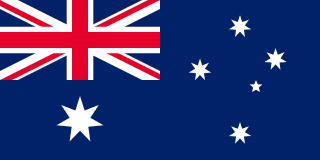
The flag of Australia
The flag is dark blue with the Union Jack in the upper corner by the flagpole, a large white seven-pointed star beneath it, and five white stars of the Southern Cross constellation on the right-hand side.
The design was chosen through a public competition in 1901, the year of federation. The Union Jack reflects the country’s British history. The large Commonwealth Star has one point for each of the six states and one for the territories. The Southern Cross is a constellation that is easy to see from Australia and has long been used to find south. The Aboriginal flag and the Torres Strait Islander flag are also official flags of Australia.
Landscape and geography
Australia is the driest inhabited continent and also the flattest. Much of the interior, known as the Outback, is desert or dry grassland, with landmarks such as Uluru, a huge sandstone rock sacred to the local Anangu people. The Great Dividing Range runs along the east coast, and its highest point, Mount Kosciuszko, reaches 2,228 metres. The Murray and the Darling form the country’s largest river system.
Off the coast of Queensland, the Great Barrier Reef stretches for about 2,300 kilometres and is the largest coral reef system in the world. The island state of Tasmania, south of the mainland, has cool temperate rainforests.
Did you know?
- Canberra was purpose-built as the capital, partly as a compromise between the rival cities of Sydney and Melbourne.
- Australia has more than 10,000 beaches along its coastline.
- Most of Australia’s native mammals, including kangaroos, koalas and wombats, are marsupials that carry their young in a pouch.
- The Dingo Fence in south-eastern Australia is one of the longest fences in the world, built to keep dingoes away from sheep.
Key facts
- Capital
- Canberra
- Continent
- Oceania
- Population
- About 26 million
- Land neighbours
- None
- Coast
- Island country
- European Union
- Not a member
- NATO
- Not a member
Australia in numbers
| Population | 26,439,111 people |
|---|---|
| Land area | 7,682,300 km² |
| Population density | 3.4 people/km² |
| Total GDP | $1,688,000,000,000 |
| GDP per capita | $63,840 |
| Life expectancy | 83.3 years |
| Unemployment rate | 3.7% |
| Coastline | 25,760 km |
| Forest coverage | 17.4% |
| Human Development Index | 0.946 |
| UNESCO World Heritage sites | 20 sites |
| Airports | 480 airports |
These are the figures used in GeoDecide. They are rounded and can lag behind the latest official statistics.
World rankings
Geo Sort asks you to place countries by rank. A lower number means a higher place in that category.
| Land Area | #6 |
|---|---|
| Coastline | #7 |
| FIFA Ranking (M) | #23 |
| Military Strength | #16 |
| Avg Annual Temperature | #72 |
| UNESCO Sites | #18 |
| Population Density | #191 |
| Highest Point | #99 |
Practise Australia on Geodly
- Flag Drawing: The flag of Australia is in the Easy set. Draw it from memory and compare your drawing with the real design.
- Geo Click: Find Australia on the map, or locate its capital, Canberra, in the capital modes.
- GeoDecide: Compare Australia with other countries on the statistics listed above.
- Geo Sort: Place Australia in the category where its world rank is strongest.
- Terra Tac Toe: Use Australia as an answer when its facts fit both the row and the column of a square.
Sources: Encyclopaedia Britannica: Australia · CIA World Factbook: Australia